


Experts of the Committee against Torture welcome Lithuania’s holistic approach on promoting human rights and fighting torture
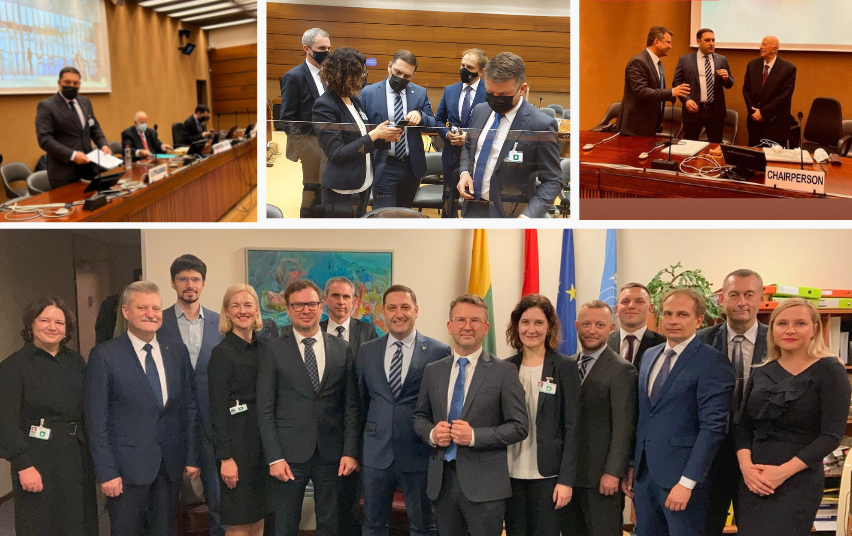
The Committee against Torture this afternoon concluded its consideration of the fourth periodic report of Lithuania on its efforts to implement the provisions of the Convention against Torture, with Committee Experts welcoming Lithuania’s holistic approach on promoting human rights and fighting torture, and asking about the state of emergency on the border with Belarus and the challenges related to the situation of migrants therein.
Committee Experts said that a holistic approach had been taken for the promotion of human rights and the fight against torture in Lithuania. There was high political will for the respect and promotion of human rights, including the prohibition of torture and other ill-treatment.
The Committee needed to be informed of the measures taken by the State party to meet the challenges faced currently, especially for the prevention and prohibition of torture and other ill-treatment of asylum seekers and irregular migrants. A further issue of concern was whether they were de facto detained in locked institutions, as in this case they were deprived of their right to freedom of movement. More information was requested as to what measures the State party had adopted to improve reception conditions, taking into account the basic needs of asylum-seekers with specific needs.
Elanas Jablonskas, Deputy Minister of Justice of Lithuania and head of delegation, said human rights and dignity were at the heart of the constitutional order of Lithuania, which condemned torture and cruel and degrading treatment and punishment, and had built a solid institutional and national regulatory framework to prevent all forms of inhumane treatment. As the international community was aware, Lithuania had been facing a large-scale hybrid attack organised by the Belarussian regime. A number of amendments to the law on the status of aliens had been adopted concerning the restriction of movement for asylum seekers, while preserving fundamental human rights. Lithuania was facing serious unprecedented challenges due to unacceptable behaviour by the neighbouring regime, which had reached a critical point in respect of the country’s security. A temporary state of emergency had been introduced in the border zone in November and human rights restrictions had been imposed only where necessary. Humanitarian aid was provided to migrants.
The delegation of Lithuania consisted of members of the Ministries of Justice, the Interior, Social Security and Labour, Health, and Foreign Affairs, as well as of the Prosecutor General’s Office, the State Border Guard Service, and of the Permanent Mission of Lithuania to the United Nations Office at Geneva.
Report
The Committee has before it the fourth periodic report of Lithuania (CAT/C/LTU/4).
Presentation of Report
ELANAS JABLONSKAS, Deputy Minister of Justice of Lithuania and head of delegation, said human rights and dignity were at the heart of the constitutional order of Lithuania, which condemned torture and cruel and degrading treatment and punishment. Lithuania had built a solid institutional and national regulatory framework to prevent all forms of inhumane treatment. The criminal act of torture was punishable by up to five years imprisonment.
As the international community was aware, Lithuania had been facing a large-scale hybrid attack organised by the Belarussian regime in retaliation for Lithuania’s strong support to the Belarussian people fighting for freedom and in response to the European Union sanctions imposed for the harsh violations of human rights in Belarus. In response, a State-wide extreme situation and the Union Civil Protection Mechanism had been activated in July. A number of amendments to the law on the status of aliens had been adopted concerning the restriction of movement for asylum seekers, while preserving fundamental human rights. Lithuania was facing serious unprecedented challenges due to unacceptable behaviour by the neighbouring regime, which had reached a critical point in respect of the country’s security. A temporary state of emergency had been introduced in the border zone in November and human rights restrictions had been imposed only where necessary. Humanitarian aid was provided to migrants.
Lithuania had made considerable progress in improving material conditions in police detention centres. Detention centres were newly built and in good condition. Inmates and detainees had been integrated into the national health insurance system. As a result of various measures, the total number of inmates in prison centres had decreased by 70 per cent. A modernisation process of the prison system was underway. Further efforts to improve prison security and prevent ill-treatment included the development of a dynamic security model, among others. A modern training centre had been established for prison staff to increase their professional standards and to change attitudes of both staff and inmates, thus contributing to the prevention of ill-treatment and torture.
Legislative reform had been implemented in the field of metal health care, aimed, first, and above all, at the protection of the rights of involuntarily hospitalised patients. With regard to human trafficking, Lithuania continued its efforts to combat this, in particular by increasing the competences and abilities of staff from relevant institutions to identify potential victims of trafficking, and by implementing awareness-raising campaigns towards zero tolerance for human trafficking and slavery. The protection of children’s rights was a priority issue in Lithuania, which had introduced a complete prohibition of corporal punishment of children, including within the family. Several national initiatives had been implemented aimed at promoting the non-violent upbringing of children.
Despite a comprehensive legal framework, the problem of domestic violence remained present in Lithuania. During the pandemic, the number of cases of domestic violence had increased by about 20 per cent. Preventive work against domestic violence was enhanced through the National Programme for the Prevention of Domestic Violence and Provision of Assistance to Victims, including information campaigns. Non-governmental organizations were actively involved in providing assistance to the victims of violence. A new law on Assistance to Victims of Criminal Offences established a system of assistance to victims of any crime. Lithuania recognised that the State needed competent and well-trained officials to ensure proper respect for human rights. Many law-enforcement officials and judicial officials had attended training sessions in this regard.
Lithuania’s way forward was a human-centred and community-based approach to the prevention of ill-treatment. Lithuania was strongly determined to continue its efforts to promote and further improve measures for combatting torture and all forms of ill-treatment and would do its utmost to address all concerns raised by the Committee.
UN Geneva information.
