


In Geneva, United Nations members condemn the increasing human rights violations in Belarus
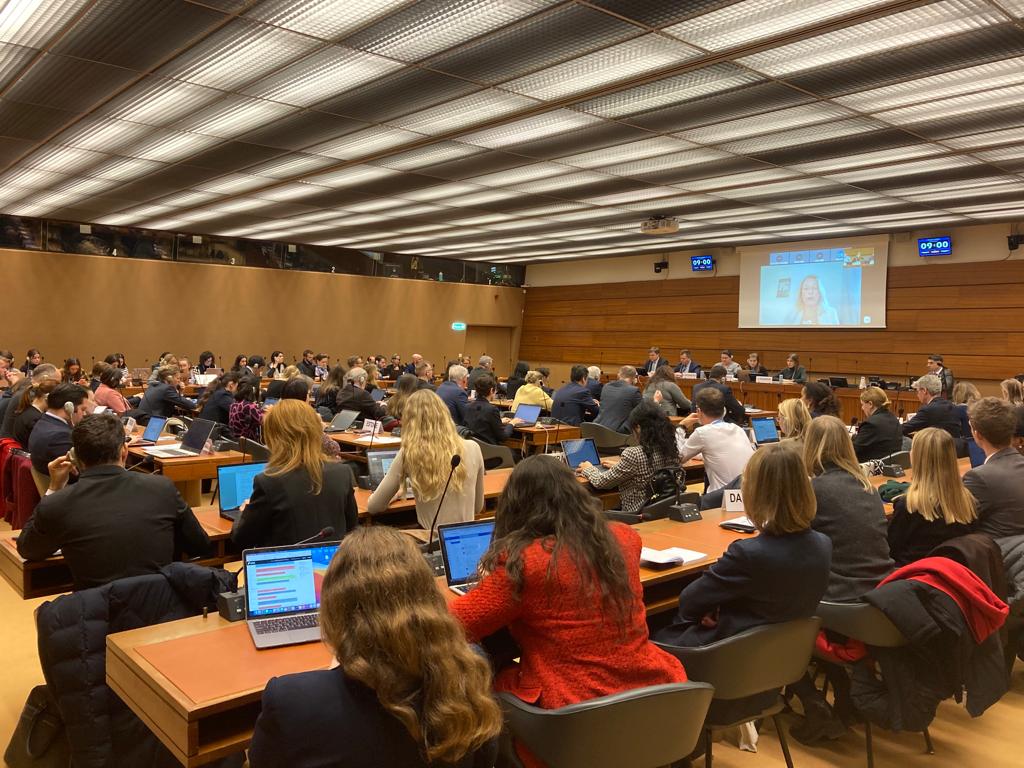
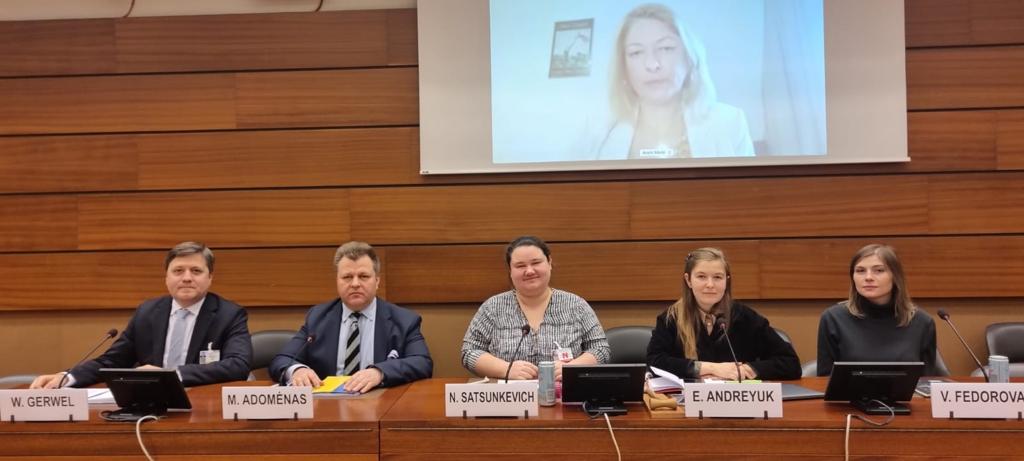
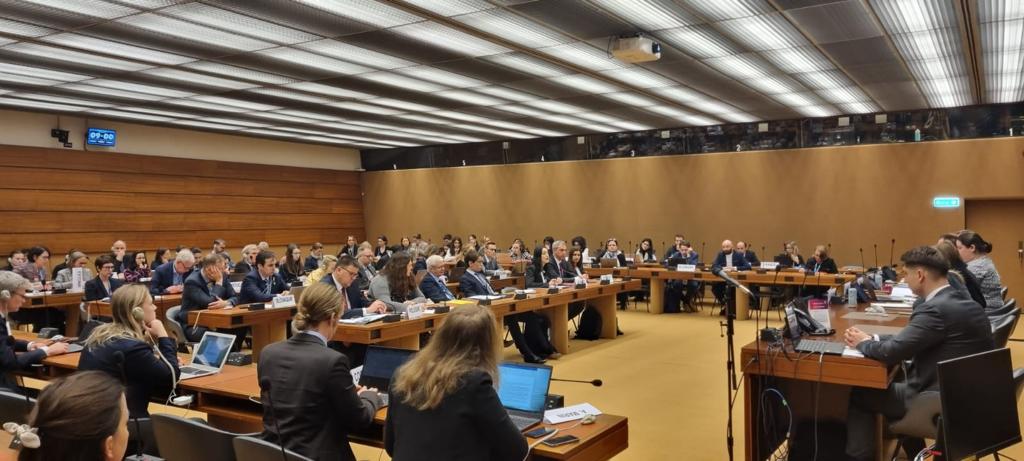
On 2 March, the Permanent Mission of Lithuania in Geneva, together with the Human Rights House Foundation and the World Organisation against Torture, organised an event to discuss the rapidly deteriorating human rights situation in Belarus and the need to hold the Belarusian authorities accountable for systemic human rights violations.
Opening remarks were given by Dr. Mantas Adomėnas, Vice-Minister of Foreign Affairs and Wojciech Gerwel, Deputy Foreign Minister of Poland. In addition, Megi Fino, Deputy Foreign Minister of Albania addressed the audience. The discussion was moderated by Eugenia Andreyuk of the World Organisation Against Torture and featured Anais Marin, UN Special Rapporteur on Human Rights in Belarus, Victoria Fedorova, Chairperson of the Legal Initiative, and Nataliia Satsunkevich of the Viasna Human Rights Centre. The event was co-sponsored by Poland, the USA, Japan, Czech Republic, Norway, Finland, Germany, Romania, Slovakia, Estonia, Latvia, Denmark, Switzerland, Albania, Greece, France and NGOs.
Dr. Mantas Adomėnas stressed that attention to these issues on the international agenda must only increase. "A concerted effort by the international community is needed to ensure accountability for ongoing violations of international law. Accountability is essential to prevent further human rights violations in Belarus," the Vice-Minister said.
Over the past year, the Human Rights Council has been examining the human rights situation in Belarus, and as early as spring 2022, it acknowledged that the Belarusian authorities are not taking effective measures to investigate widespread cases of arbitrary detention and torture, and are not following due process of law in legal proceedings. During this period, Belarus has not taken any measures to implement the recommendations of the High Commissioner for Human Rights or the UN Special Rapporteur.
During the event, speakers shared updates on the growing threats to civil society, journalists, and the opposition in exile. More than one and a half thousand political prisoners inside the country are subjected to violence and are denied access to legal assistance. Human rights activists face death sentences. It was stressed that the Belarusian authorities, by supporting Russia's aggression against Ukraine, have only made the situation of its own people worse.
Lithuania and like-minded countries are providing assistance to political opposition leaders, civil society, free media, and academia forced to flee Belarus. Strong international solidarity and support for the people of Belarus has been demonstrated by the award of Nobel Peace Prize to the founder of Viasna, A. Bialatski.
Asked how to help political prisoners and the persecuted civil society inside Belarus, Vice-Minister Adomėnas stressed: "I would like to appeal to the representatives of the EU Member States here: do not renew diplomatic contacts with Belarus. Sanctions are working, Lukashenko is afraid of them - when the next package of Belarusian sanctions comes, do not look for exemptions for your national companies. Bring universal jurisdiction torture cases against Belarus. Hearing these horrific testimonies about the persecution of political prisoners is no longer enough to express concern - action is needed."
The international community was urged to continue to assist Belarusians in defending freedom and democracy in their country, and to pay greater attention to strengthening the Human Rights Council's mechanisms to ensure accountability for all human rights violations in Belarus.
The event was organised during the 52nd session of the United Nations Human Rights Council.
