


Linkevičius: The Espoo Convention helped reveal problems related to the Astravets NPP to the international community
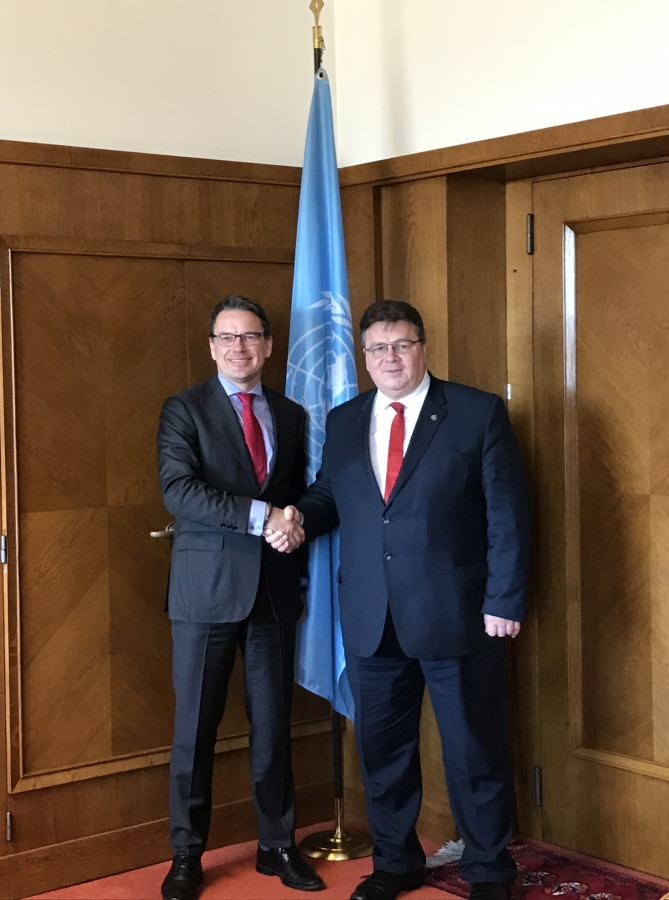
In a meeting with the Executive Secretary of the United Nations Economic Commission for Europe (ECE) Christian Friis Bach on 27 February in Geneva, the Minister of Foreign Affairs of Lithuania Linas Linkevičius raised issues related to the Belarusian nuclear power plant (NPP) and the project’s compliance with the conditions as set out in the Espoo and Aarhus Conventions.
“The Espoo and Aarhus Conventions are very important instruments that helped reveal environmental and nuclear safety problems related to the Astravets NPP to the international community,” said Lithuania’s Foreign Minister.
Linkevičius stressed that Belarus took a formalistic approach to the provisions of the Conventions and avoided implementing recommendations approved in the meetings of the Parties. According to Lithuania’s Foreign Minister, such approach has undermined the importance of the international Conventions and reduces their effectiveness in resolving disagreements on the potential adverse transboundary environmental impact. Lithuania’s Foreign Minister emphasized his disappointment that Belarus actively shied away from a constructive dialogue on the Astravets NPP project and manipulated facts. The Executive Secretary of the UN ECE agreed with Linkevičius, stressing that transparency and dialogue were key elements of the Espoo and Aarhus Conventions.
The 6th session of the Meeting of the Parties to the Espoo Convention, which took place on 2-5 June 2014, recommended Belarus to invite an International Atomic Energy Agency (IAEA) mission to carry out a Site and External Events Design (SEED) review. However, an IAEA team of experts carried out a SEED mission on 16-20 January 2017, which reviewed other aspects rather than evaluating site surveys, the selection criteria and suitability of construction sites, because Belarus has not requested this.
