


Lithuania elected to Espoo Committee, Belarusian nuclear power plant does not meet Espoo Convention requirements
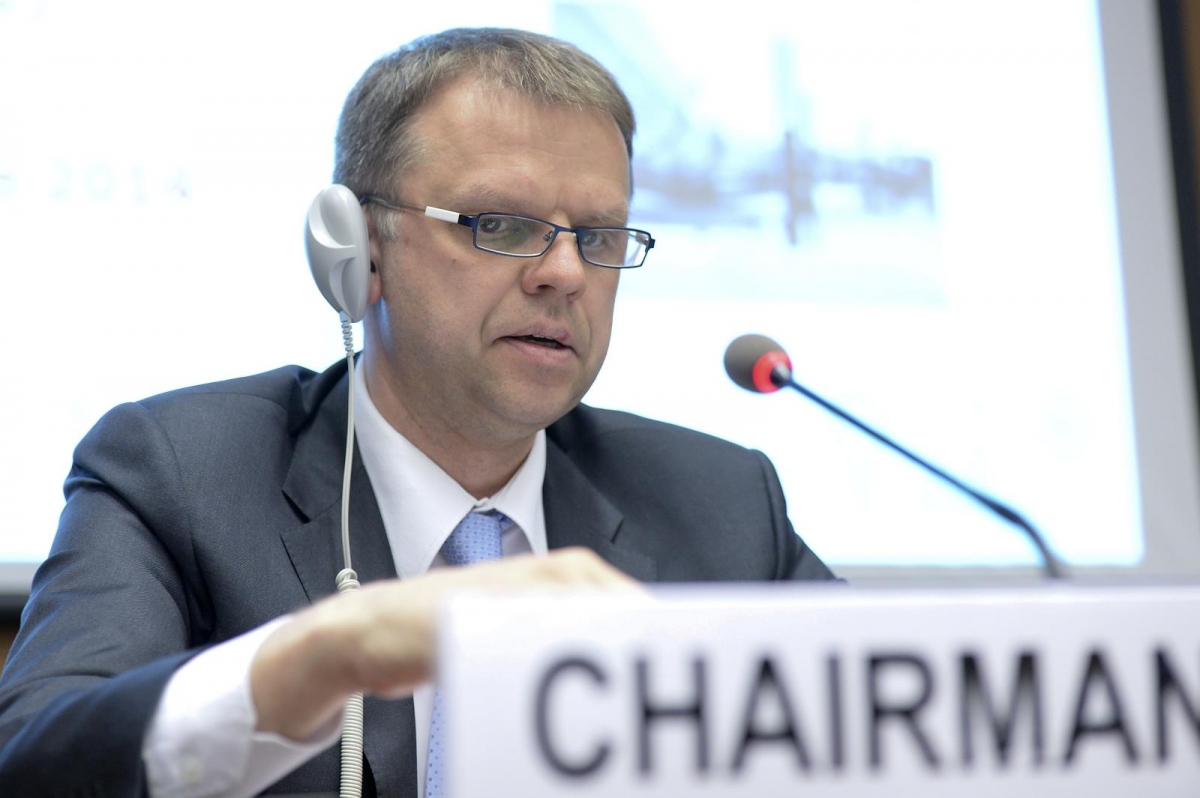

Alongside the Minister of Ecology and Natural Resources of Ukraine, A. Mochnik, the Permanent Representative of Lithuania to the UN and other international organizations, R. Paulauskas, chaired the high-profile meeting of Espoo Convention, which took place on the 5th of June in Geneva, Switzerland. It was confirmed during the meeting that if Belarus continued developing its project to build a nuclear power plant (NPP) in the Astravec district, it would be considered as the failure to meet Espoo Convention requirements. In addition, it was approved to appoint the Lithuanian representative R. Švedas to the Implementation Committee of Espoo Convention.
The Implementation Committee of Espoo Convention assesses whether projects initiated by states comply with the standards of international environmental protection by carrying out the independent evaluation of the impact of these projects to the environment. Inferences and recommendations for conflict resolution are also provided by the Committee.
During this high-profile meeting, inferences and recommendations stating that the Belarusian project of nuclear power plant is not in compliance with Espoo Convention requirements, adopted by the Espoo Committee on 15 April 2013, were confirmed. Belarus was encouraged to respect these requirements and take into account substantive questions raised by Lithuania. It was also suggested that Belarus should consult International Atomic Energy Agency (IAEA), which would carry out the independent evaluation of the NPP platform chosen by Belarus. The lack of Belarus compliance with the requirements of the Espoo Convention is going to be further examined in the Implementation Committee.
Espoo Convention, comprising all Member States of the European Union, as well as Canada and countries in Central Asia and Caucus region, is one of the most significant multilateral co-operation instruments in implementation of state-initiated projects that could have an impact of possible tresspassing of state borders. Convention allows for concrete process of co-operation and mechanisms of conflict resolution between countries.
