


Lithuania Makes Human Rights Recommendations to Russia
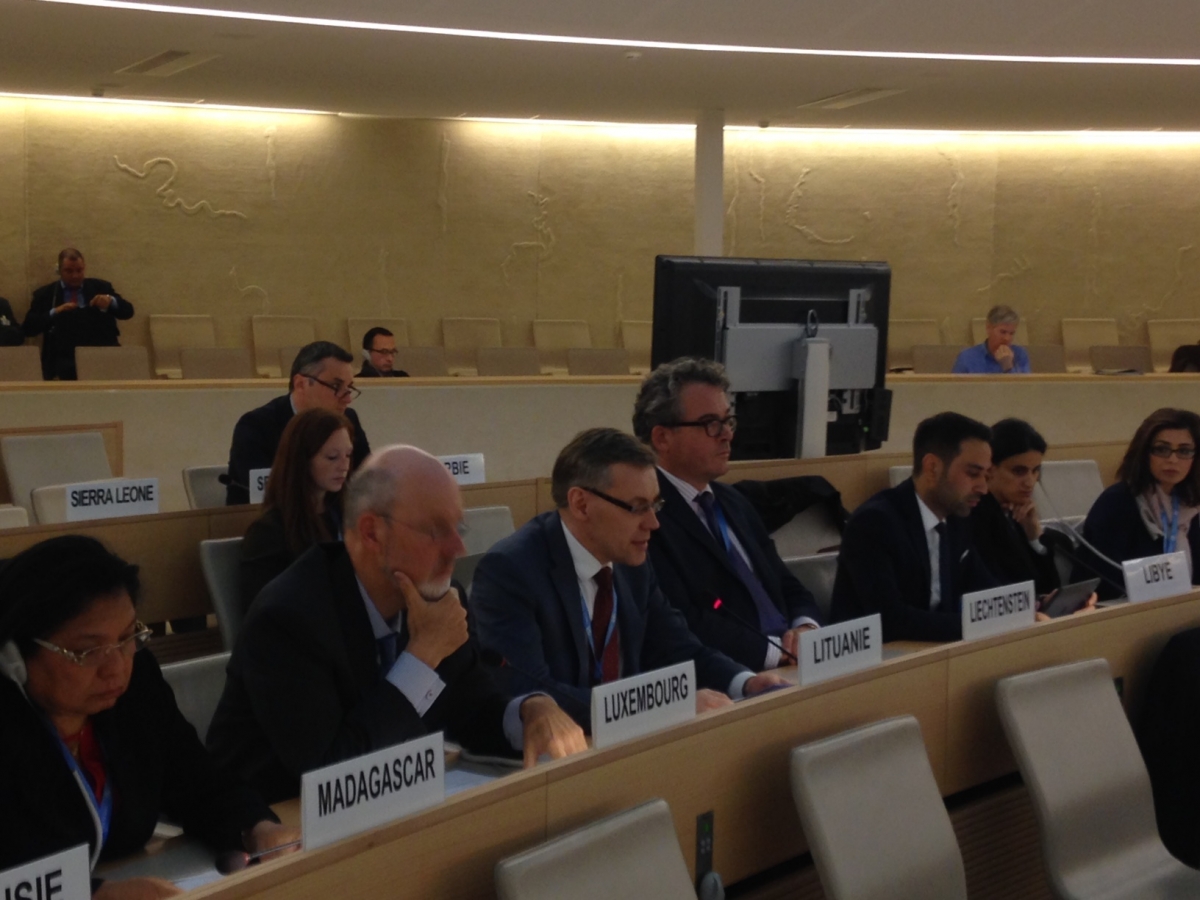
At the ongoing 30th session of the Working Group of the Universal Periodic Review of human rights, on May 14, the Permanent Representative of Lithuania in Geneva, Ambassador Andrius Krivas, took the floor in the UPR interactive discussion with Russia.
Lithuania expressed regret over Russia’s failure to live up to some of the previously accepted recommendations and recommended to Russia to end legal and political restrictions on freedom of expression, association and assembly against all persons, including Crimean Tatars in the illegally annexed Crimea, and in Ukrainian territories under control of Russia-backed armed groups; to provide free and unimpeded access for international human rights mechanisms to Ukraine’s Crimea and Donbas as well as to Georgia’s regions of Abkhazia and Tskhinvali; to repeal the laws on “foreign agents” and “undesirables”; to investigate attacks on members of civil society, including LGBTI persons in Chechnya, and bring perpetrators to justice while providing legal redress for victims; and to repeal laws that allow to disregard the decisions by international human rights bodies, notably the European Court for Human Rights.
The 30th session of the UPR Working Group takes place in Geneva from 7 to 18 May. It examines the human rights situation in Turkmenistan, Burkina Faso, Cabo Verde, Germany, Uzbekistan, Tuvalu, Columbia, Djibouti, Canada, Bangladesh, Russia, Azerbaijan, Cameroon, and Cuba.
The UPR is a human rights mechanism employed since 2008. It is considered one of the most successful UN working methods in the field of human rights, which ensures equal treatment of all Member States. The UPR assesses the human rights situation in each individual country and provides recommendations for improvements. At the end of each UPR cycle, UN Members produce reports about the implementation of the adopted recommendations and overall progress in the area of human rights. Countries undergo the UPR every five years. Lithuania had its first review in 2011. In 2017, its second-cycle UPR report got adopted.
